

Tomato Farming in India: Complete Guide to Cultivation, Cost, Yield, Profit, Varieties, Fertilizer, Pest Control, and Harvesting
Learn complete tomato farming in India including best season, varieties, soil, nursery, fertilizer, pest control, yield, cost, and profit per acre.

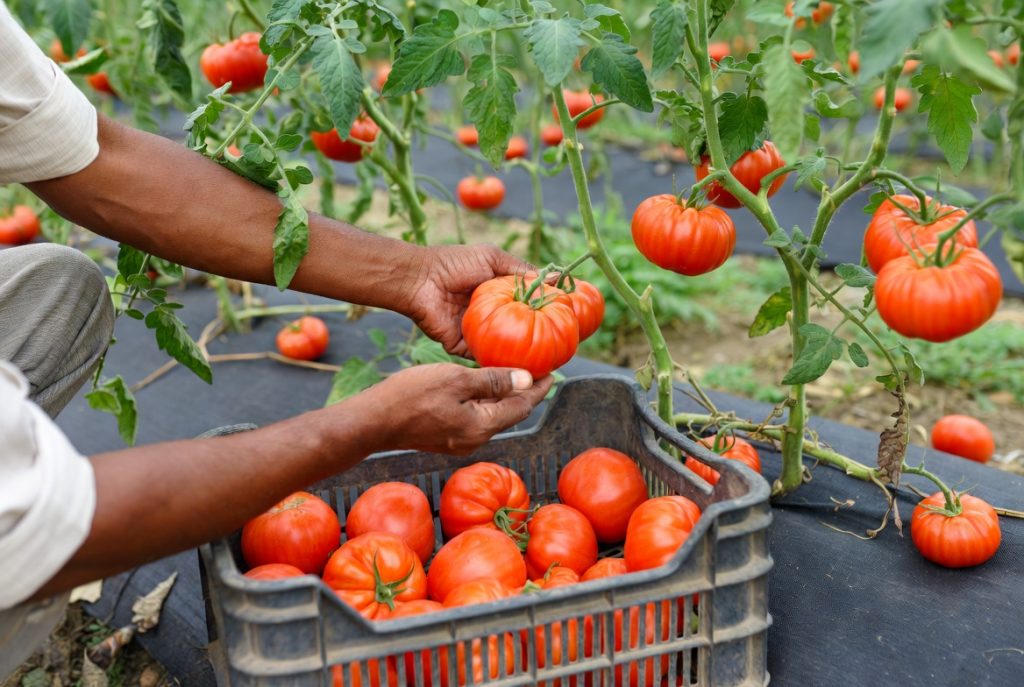
Introduction to Tomato Farming in India
Tomato farming is one of the most profitable vegetable farming businesses in India. Tomato is cultivated almost throughout the year in different agro-climatic regions and has strong demand in fresh vegetable markets, hotels, restaurants, retail chains, food processing units, and export markets. It is widely used in Indian kitchens for curries, chutneys, soups, salads, sauces, ketchup, puree, and ready-to-eat food products.
Tomato is rich in vitamins A and C, minerals, organic acids, and antioxidants such as lycopene. Due to its high nutritional value and regular demand, tomato cultivation can give excellent returns to farmers when managed scientifically. Both small farmers and commercial growers can earn good profits from tomato farming by choosing the right variety, following proper nursery management, using drip irrigation, applying balanced fertilizers, and controlling pests and diseases at the right time.
In India, tomato is grown in states such as Maharashtra, Karnataka, Andhra Pradesh, Telangana, Tamil Nadu, Madhya Pradesh, Uttar Pradesh, Bihar, Odisha, Punjab, Haryana, Rajasthan, Gujarat, and West Bengal. Farmers can cultivate tomatoes in open fields, polyhouses, shade nets, and protected cultivation systems depending on investment capacity and market demand.
This article explains tomato farming in India, including climate, soil, varieties, nursery raising, transplanting, fertilizer schedule, irrigation, pest and disease control, harvesting, yield, cost of cultivation, and profit per acre.

Importance of Tomato Farming
Tomato is an important commercial vegetable crop in India. It offers regular income opportunities because it can be grown in different seasons and sold in fresh or processed form.
Major benefits of tomato farming include:
- High demand throughout the year
- Suitable for small, medium, and large farmers
- Good income potential per acre
- Can be grown in open fields and protected cultivation
- Strong market demand from households and industries
- Suitable for drip irrigation and fertigation
- Multiple harvests from a single crop
- Scope for value addition through sauce, ketchup, puree, and drying
Tomato farming becomes more profitable when farmers focus on quality production, disease-resistant varieties, timely harvesting, grading, and proper marketing.
Climate Requirements for Tomato Farming
Tomato is a warm-season crop and grows well under moderate temperature conditions. Although it can be cultivated in different seasons, extreme heat, heavy rainfall, frost, and waterlogging can reduce yield and fruit quality.
Ideal Temperature for Tomato Cultivation
The ideal temperature for tomato farming is between 18°C and 30°C. The best temperature for flowering and fruit setting is around 20°C to 25°C.
Temperature effects on tomato plants:
| Temperature Condition | Effect on Tomato Crop |
|---|---|
| Below 10°C | Slow growth and poor flowering |
| 18°C to 30°C | Best vegetative growth and fruit development |
| 20°C to 25°C | Ideal for fruit setting |
| Above 35°C | Poor fruit set, flower drop, and low yield |
| Frost condition | Severe plant damage or crop failure |
High temperature during flowering can cause flower drop and poor fruit formation. Very low temperature can delay plant growth and maturity. Therefore, farmers should select the right sowing season according to local climate.

Best Season for Tomato Farming in India
Tomato can be grown in different seasons depending on the region. However, the best season varies from state to state.
Common Tomato Growing Seasons
| Season | Nursery Sowing Time | Transplanting Time | Harvesting Period |
|---|---|---|---|
| Kharif Crop | June to July | July to August | September to November |
| Rabi Crop | September to October | October to November | December to March |
| Summer Crop | December to January | January to February | March to May |
In many parts of India, the rabi season tomato crop gives better quality fruits and good market prices. In areas with irrigation facilities, tomato can also be cultivated during summer. In heavy rainfall regions, raised beds and proper drainage are very important.
Soil Requirements for Tomato Farming
Tomato grows well in well-drained fertile soils rich in organic matter. Loamy soil, sandy loam soil, and red soil are considered suitable for tomato cultivation. Heavy clay soils should be avoided unless proper drainage is available.
Ideal Soil Conditions
- Soil type: Loamy, sandy loam, red soil
- Soil pH: 6.0 to 7.5
- Drainage: Good drainage is essential
- Organic matter: High organic carbon improves yield
- Avoid: Waterlogged, saline, and highly acidic soils
Waterlogging can cause root rot, bacterial wilt, fungal diseases, and poor plant growth. Before planting, farmers should conduct a soil test to know soil fertility and nutrient requirements. Based on the soil test report, fertilizer doses can be adjusted for better results.

Suitable Tomato Varieties in India
Selection of tomato variety is one of the most important steps in profitable tomato farming. Farmers should choose varieties based on local climate, market demand, fruit size, fruit colour, shelf life, yield potential, and disease resistance.
Tomato varieties are mainly divided into open-pollinated varieties and hybrids.
Open-Pollinated Tomato Varieties
Open-pollinated varieties are generally low-cost and suitable for farmers who want to reduce seed expenses. However, their yield is usually lower compared to hybrids.
Popular open-pollinated tomato varieties include:
Arka Vikas
Arka Vikas is a popular tomato variety suitable for table purposes. It produces medium-sized fruits with good colour and acceptable yield.
Arka Saurabh
This variety produces attractive red fruits and is suitable for fresh market sales. It performs well under proper management.
Pusa Ruby
Pusa Ruby is one of the older and well-known tomato varieties in India. It is suitable for different regions and produces medium-sized fruits.
Punjab Chhuhara
Punjab Chhuhara is suitable for processing and fresh consumption. Fruits are firm and have good keeping quality.
CO-3
CO-3 is grown in some southern regions and is suitable for local market demand.
Yield of Open-Pollinated Tomato Varieties
Open-pollinated tomato varieties generally produce 10 to 15 tonnes per acre, depending on soil fertility, irrigation, climate, pest control, and management practices.

Hybrid Tomato Varieties
Hybrid tomato varieties are preferred by commercial farmers because of their high yield, better fruit quality, uniform size, improved shelf life, and disease resistance. Although hybrid seeds are costly, they can give higher returns when managed properly.
Popular hybrid tomato varieties include:
Arka Rakshak
Arka Rakshak is a high-yielding tomato hybrid known for resistance to multiple diseases. It is suitable for commercial cultivation and can give excellent yield under good management.
Arka Samrat
Arka Samrat is another popular hybrid suitable for high yield and disease tolerance. Fruits are firm and attractive for market sale.
US-440
US-440 is widely grown by commercial tomato farmers. It produces firm fruits with good transport quality.
Abhinav
Abhinav is a commercial hybrid suitable for fresh market purposes. It has good yield potential and fruit quality.
Namdhari Tomato Hybrids
Namdhari hybrids are popular among farmers in different regions for uniform fruits, good shelf life, and market acceptance.
Syngenta Tomato Hybrids
Syngenta hybrids are used by many commercial growers for high productivity, disease tolerance, and attractive fruits.
Yield of Hybrid Tomato Varieties
Hybrid tomatoes can produce 20 to 35 tonnes per acre under open-field cultivation. Under protected cultivation with drip irrigation, fertigation, staking, and scientific management, the yield can be much higher.

Land Preparation for Tomato Farming
Good land preparation helps in better root growth, drainage, aeration, and nutrient availability. The field should be prepared well before transplanting seedlings.
Steps in Land Preparation
- Plough the land deeply to loosen the soil.
- Remove weeds, stones, and previous crop residues.
- Give 2 to 3 harrowings to make the soil fine and friable.
- Apply well-decomposed farmyard manure.
- Prepare raised beds, ridges, or furrows depending on irrigation method.
- Provide proper drainage channels to remove excess water.
Farmyard Manure Application
Apply 8 to 10 tonnes of well-decomposed farmyard manure per acre before final land preparation. FYM improves soil structure, microbial activity, water-holding capacity, and nutrient availability.
Farmers can also apply compost, vermicompost, neem cake, or other organic manures based on availability and budget.

Nursery Raising for Tomato Farming
Tomato is usually grown by transplanting seedlings raised in a nursery. Healthy seedlings are the foundation of a good tomato crop.
Seed Rate for Tomato
| Type of Variety | Seed Requirement Per Acre |
|---|---|
| Hybrid tomato | 40 to 60 grams |
| Open-pollinated tomato | 100 to 120 grams |
Hybrid seed is costly, so farmers should use nursery trays or protected nursery methods to reduce seed wastage.
Nursery Bed Preparation
Prepare raised nursery beds of convenient size. The nursery area should be well-drained and protected from direct heavy rain, pests, and diseases.
A good nursery medium may include:
- Fine soil
- Sand
- Compost or vermicompost
- Cocopeat, especially for tray nursery
Seed Treatment
Seed treatment helps protect seedlings from seed-borne and soil-borne diseases. Farmers should use recommended fungicides or biological agents such as Trichoderma as per local agriculture department guidance.
Nursery Management Tips
- Use disease-free seeds.
- Avoid overcrowding in nursery beds.
- Water lightly and regularly.
- Protect seedlings from direct heavy rain.
- Use shade net during extreme heat.
- Monitor damping-off disease.
- Remove weak and diseased seedlings.
- Harden seedlings before transplanting.
Tomato seedlings become ready for transplanting in about 25 to 30 days after sowing.
Transplanting Tomato Seedlings
Transplanting should be done when seedlings are healthy, strong, and have 4 to 6 true leaves. Avoid transplanting over-aged, weak, or diseased seedlings.
Best Time for Transplanting
Transplanting should preferably be done in the evening or on a cloudy day. This reduces transplanting shock and helps seedlings establish quickly.
Spacing for Tomato Farming
Common spacing followed in tomato cultivation:
| Crop Type | Recommended Spacing |
|---|---|
| Normal open-field crop | 60 cm × 45 cm |
| Vigorous hybrid crop | 75 cm × 45 cm |
| Staked tomato crop | 75 cm × 60 cm |
| Protected cultivation | Depends on system and variety |
Proper spacing ensures better sunlight penetration, aeration, spraying efficiency, and fruit development. Dense planting can increase disease pressure and reduce fruit quality.
Irrigation Management in Tomato Farming
Tomato requires regular and uniform moisture throughout the crop period. Moisture stress during flowering and fruit development can reduce yield. Excess water can cause root diseases and fruit cracking.
Critical Stages for Irrigation
- After transplanting
- Flowering stage
- Fruit setting stage
- Fruit development stage
- Fruit enlargement stage
Drip Irrigation in Tomato Farming
Drip irrigation is highly recommended for tomato cultivation. It saves water, improves fertilizer efficiency, reduces weed growth, and supports better crop growth.
Benefits of drip irrigation:
- Saves irrigation water
- Reduces weed growth
- Improves nutrient use efficiency
- Reduces leaf wetness and disease spread
- Supports fertigation
- Improves yield and fruit quality
- Reduces labour cost
Under drip irrigation, water should be supplied based on crop stage, soil type, and weather conditions. Sandy soils require more frequent irrigation than loamy soils.
Fertilizer Management in Tomato Farming
Balanced nutrient management is essential for high tomato yield. Excess nitrogen can cause too much vegetative growth and delay fruiting, while potassium deficiency can reduce fruit quality and shelf life.
Fertilizer application should ideally be based on soil testing. However, a general recommendation per acre is given below.
General Fertilizer Recommendation Per Acre
| Nutrient | Quantity Per Acre |
|---|---|
| Farmyard manure | 8 to 10 tonnes |
| Nitrogen | 60 to 80 kg |
| Phosphorus | 40 to 50 kg P₂O₅ |
| Potassium | 40 to 50 kg K₂O |
Fertilizer Application Method
- Apply full phosphorus as basal dose.
- Apply half nitrogen and half potassium as basal dose.
- Apply remaining nitrogen and potassium in 2 to 3 split doses.
- Top dressing should be done during active growth, flowering, and fruit development stages.
Role of Important Nutrients
Nitrogen
Nitrogen supports plant growth, leaf development, and overall crop vigour. However, excess nitrogen can increase pest attack and delay fruit maturity.
Phosphorus
Phosphorus improves root development, flowering, and early plant establishment.
Potassium
Potassium improves fruit size, colour, firmness, disease tolerance, and shelf life.
Calcium
Calcium deficiency can cause blossom end rot in tomato fruits. Regular calcium application and uniform irrigation help reduce this problem.
Micronutrients
Micronutrients such as boron, zinc, magnesium, and iron are important for flowering, fruit setting, and plant health.
Drip Fertigation Schedule for Tomato
Farmers using drip irrigation can apply fertilizers through fertigation. Fertigation improves fertilizer efficiency and provides nutrients directly to the root zone.
A basic fertigation plan may include:
| Crop Stage | Fertilizer Focus |
|---|---|
| 0 to 20 days after transplanting | Root development and vegetative growth |
| 21 to 40 days | Vegetative growth and flowering preparation |
| 41 to 60 days | Flowering and fruit setting |
| 61 to 90 days | Fruit development and fruit enlargement |
| 90 days onwards | Fruit quality and continuous harvesting |
Water-soluble fertilizers should be used under fertigation. The exact fertilizer dose should be finalized based on soil test, water quality, crop stage, and expert recommendation.
Weed Management in Tomato Farming
Weed control is very important during the first 45 to 60 days after transplanting. Weeds compete with tomato plants for nutrients, water, sunlight, and space. They also act as hosts for pests and diseases.
Weed Control Methods
- Hand weeding
- Hoeing
- Intercultivation
- Mulching
- Drip irrigation with plastic mulch
- Crop rotation
Mulching in Tomato Farming
Mulching is highly useful in tomato cultivation. Plastic mulch or organic mulch can be used depending on cost and availability.
Benefits of mulching:
- Suppresses weed growth
- Conserves soil moisture
- Reduces soil temperature fluctuation
- Prevents fruit contact with soil
- Improves fruit quality
- Reduces labour requirement
- Supports better yield
Drip irrigation with plastic mulch is one of the most effective methods for commercial tomato farming.
Training and Staking in Tomato Farming
Training and staking are useful in hybrid tomato cultivation, especially for indeterminate and semi-determinate varieties. Staking keeps plants upright and prevents fruits from touching the soil.
Benefits of Staking
- Improves sunlight and air movement
- Reduces disease incidence
- Improves fruit quality
- Makes spraying easier
- Makes harvesting easier
- Reduces fruit rotting
- Increases marketable yield
Bamboo sticks, wooden stakes, plastic ropes, or trellis systems can be used for staking. In protected cultivation, vertical training is commonly followed.
Major Pests in Tomato Farming
Tomato is affected by several pests that can reduce yield and fruit quality. Regular monitoring and Integrated Pest Management practices are necessary.
Fruit Borer in Tomato
Fruit borer is one of the most damaging pests in tomato farming. The larvae bore into fruits and make holes, causing fruit damage and market rejection.
Symptoms
- Holes on fruits
- Damaged fruits with larval feeding
- Fruit rotting
- Flower and bud damage
- Reduced marketable yield
Management
- Collect and destroy damaged fruits.
- Use pheromone traps.
- Follow crop rotation.
- Avoid excessive nitrogen.
- Use recommended biological or chemical control measures.
- Spray only as per local expert recommendation.
Whitefly in Tomato
Whitefly is a serious pest because it can transmit Tomato Leaf Curl Virus. It sucks sap from leaves and weakens the plant.
Symptoms
- Yellowing of leaves
- Curling leaves
- Sticky honeydew on leaves
- Sooty mould development
- Stunted plant growth
- Spread of viral disease
Management
- Use yellow sticky traps.
- Remove weeds around the field.
- Avoid continuous tomato cultivation.
- Use resistant hybrids when available.
- Remove infected plants early.
- Follow recommended insecticide rotation to avoid resistance.
Thrips in Tomato
Thrips damage leaves, flowers, and fruits. They can also transmit viral diseases in some crops.
Symptoms
- Leaf curling
- Silvering effect on leaves
- Flower drop
- Poor fruit setting
- Small scars on fruits
Management
- Monitor crop regularly.
- Use blue sticky traps.
- Remove weeds.
- Use reflective mulch where suitable.
- Follow IPM-based control practices.
Mites in Tomato
Mites are common during hot and dry weather. They suck sap from leaves and reduce plant vigour.
Symptoms
- Yellow speckling on leaves
- Leaf drying
- Webbing in severe cases
- Reduced plant growth
Management
- Maintain proper field moisture.
- Avoid dust accumulation.
- Use recommended miticides only when needed.
- Encourage natural enemies.
Integrated Pest Management in Tomato
Integrated Pest Management, or IPM, reduces pest damage while minimizing unnecessary pesticide use.
Important IPM practices include:
- Use pest-free seedlings.
- Grow resistant varieties.
- Install sticky traps.
- Use pheromone traps.
- Remove infected plants.
- Follow crop rotation.
- Avoid excess nitrogen.
- Maintain field sanitation.
- Use biological control agents.
- Spray pesticides only when pest population crosses economic threshold level.
Farmers should avoid repeated use of the same pesticide because it can lead to pest resistance.
Major Diseases in Tomato Farming
Tomato is affected by fungal, bacterial, and viral diseases. Disease management should begin from nursery stage itself.
Early Blight in Tomato
Early blight is a common fungal disease in tomato. It affects leaves, stems, and fruits.
Symptoms
- Brown spots on older leaves
- Concentric ring-like spots
- Yellowing and drying of leaves
- Stem lesions
- Fruit spots in severe cases
Management
- Use disease-free seeds.
- Follow crop rotation.
- Avoid overhead irrigation.
- Remove infected leaves.
- Maintain proper spacing.
- Apply recommended fungicides preventively.
Late Blight in Tomato
Late blight is a serious disease, especially during cool and humid weather. It can spread quickly and cause heavy crop loss.
Symptoms
- Water-soaked lesions on leaves
- Dark brown patches
- White fungal growth under humid conditions
- Fruit rotting
- Rapid drying of plants
Management
- Ensure good drainage.
- Avoid dense planting.
- Remove infected plants.
- Avoid overhead irrigation.
- Use preventive fungicide sprays during favourable weather.
- Grow tolerant varieties where available.
Tomato Leaf Curl Virus
Tomato Leaf Curl Virus is one of the most serious diseases in tomato cultivation. It is mainly spread by whiteflies.
Symptoms
- Upward curling of leaves
- Small and thick leaves
- Stunted plant growth
- Poor flowering
- Very low fruiting
- Severe yield loss
Management
- Grow resistant hybrids.
- Control whitefly population.
- Use yellow sticky traps.
- Remove infected plants immediately.
- Keep field weed-free.
- Avoid planting tomato near old infected crops.
Bacterial Wilt in Tomato
Bacterial wilt is a soil-borne disease and can cause sudden wilting of plants.
Symptoms
- Sudden wilting without yellowing
- Plant collapse
- Brown discoloration inside stem
- Poor root health
Management
- Avoid planting tomato repeatedly in infected fields.
- Follow crop rotation.
- Improve drainage.
- Use resistant varieties where available.
- Remove infected plants.
- Avoid waterlogging.


Blossom End Rot in Tomato
Blossom end rot is a physiological disorder caused mainly by calcium deficiency and irregular watering.
Symptoms
- Dark sunken patch at the blossom end of fruit
- Fruit rotting from the lower end
- Poor fruit quality
Management
- Maintain uniform soil moisture.
- Avoid irregular irrigation.
- Apply calcium through recommended sources.
- Avoid excess nitrogen.
- Use mulching to conserve moisture.
Flower Drop in Tomato
Flower drop is a common problem in tomato farming and can reduce yield significantly.
Causes of Flower Drop
- High temperature above 35°C
- Low temperature
- Moisture stress
- Excess nitrogen
- Boron deficiency
- Pest attack
- Poor pollination
- Cloudy weather
Management
- Select the right planting season.
- Maintain regular irrigation.
- Avoid excess nitrogen.
- Apply balanced fertilizers.
- Use micronutrients as recommended.
- Control pests and diseases.
- Use suitable hybrids for local conditions.

Harvesting of Tomato
Tomato harvesting depends on variety, season, climate, and market requirement. Usually, tomato becomes ready for harvesting 70 to 120 days after transplanting.
Stages of Tomato Harvesting
Tomatoes can be harvested at different maturity stages depending on market distance and purpose.
| Maturity Stage | Suitable Use |
|---|---|
| Mature green stage | Long-distance transport |
| Breaker stage | Distant markets |
| Pink stage | Nearby markets |
| Red ripe stage | Local markets and processing |
For distant markets, fruits should be harvested when they start changing colour. For local markets, fruits can be harvested at pink or red stage.
Harvesting Tips
- Harvest during morning or evening hours.
- Avoid harvesting wet fruits.
- Handle fruits carefully to prevent bruising.
- Use clean crates for collection.
- Do not throw fruits during harvesting.
- Grade fruits before marketing.
Multiple pickings are done at regular intervals. In commercial tomato farming, harvesting may continue for several weeks depending on variety and crop health.
Post-Harvest Handling and Grading
Proper post-harvest handling improves market price and reduces losses.
Grading of Tomato
Tomatoes can be graded based on:
- Size
- Colour
- Shape
- Firmness
- Damage-free appearance
- Ripening stage
Damaged, cracked, diseased, and overripe fruits should be separated. Uniform and clean fruits fetch better prices in wholesale and retail markets.
Packing
Plastic crates are better than gunny bags or loose transport because crates reduce fruit damage. For distant markets, firm fruits should be packed carefully and transported quickly.


Yield of Tomato Per Acre
Tomato yield depends on variety, season, soil fertility, irrigation, pest control, and crop management.
Average Tomato Yield
| Cultivation Type | Average Yield Per Acre |
|---|---|
| Open-pollinated varieties | 10 to 15 tonnes |
| Hybrid varieties | 20 to 35 tonnes |
| Protected cultivation | Higher yield possible under good management |
Commercial farmers using hybrid seeds, drip irrigation, mulching, staking, and fertigation can achieve better yield and fruit quality.
Cost of Tomato Farming Per Acre in India
The cost of tomato cultivation varies based on seed type, labour cost, irrigation facility, fertilizer use, pest management, staking, mulching, and region.
The average cost of tomato farming is usually around ₹50,000 to ₹1,00,000 per acre in open-field cultivation.
Approximate Cost of Tomato Farming Per Acre
| Particulars | Approximate Cost |
|---|---|
| Seeds | ₹5,000 to ₹20,000 |
| Nursery raising | ₹3,000 to ₹6,000 |
| Land preparation | ₹5,000 to ₹10,000 |
| Farmyard manure | ₹8,000 to ₹15,000 |
| Fertilizers | ₹8,000 to ₹15,000 |
| Plant protection | ₹5,000 to ₹12,000 |
| Labour | ₹15,000 to ₹30,000 |
| Irrigation | ₹3,000 to ₹8,000 |
| Staking and mulching, if used | ₹10,000 to ₹35,000 |
| Miscellaneous expenses | ₹5,000 to ₹10,000 |
The total cost may increase when farmers use hybrid seeds, drip irrigation, plastic mulch, staking, and more labour. However, these practices can also increase yield and quality.
Profit from Tomato Farming Per Acre
Profit in tomato farming depends mainly on yield, selling price, and cost of cultivation. Tomato prices fluctuate heavily based on season, supply, demand, transport, and market conditions.
Profit Calculation Example
Assume the following:
- Tomato yield: 25 tonnes per acre
- Selling price: ₹10 per kg
- Gross income: 25,000 kg × ₹10 = ₹2,50,000
- Cost of cultivation: ₹80,000
Net Profit
Net profit = Gross income – Cost of cultivation
₹2,50,000 – ₹80,000 = ₹1,70,000 per acre
Therefore, under good management, tomato farming can give a net profit of around ₹1,00,000 to ₹2,00,000 per acre or more. However, profit can be lower or higher depending on market price and crop performance.
Tomato Farming Income at Different Market Prices
| Yield Per Acre | Market Price Per Kg | Gross Income |
|---|---|---|
| 20 tonnes | ₹8 | ₹1,60,000 |
| 20 tonnes | ₹10 | ₹2,00,000 |
| 25 tonnes | ₹10 | ₹2,50,000 |
| 30 tonnes | ₹12 | ₹3,60,000 |
| 35 tonnes | ₹15 | ₹5,25,000 |
Tomato farming can be highly profitable when farmers harvest during periods of good market price. However, price risk is also high, so marketing planning is important.
Marketing of Tomato
Marketing plays a major role in tomato farming profitability. Since tomato is perishable, farmers should plan marketing before harvesting.
Common Marketing Options
- Local vegetable markets
- Wholesale mandis
- Retail shops
- Supermarkets
- Hotels and restaurants
- Food processing companies
- Farmer Producer Organizations
- Direct selling to consumers
- Online vegetable supply platforms
Marketing Tips for Better Price
- Grow varieties preferred in your local market.
- Harvest at the correct maturity stage.
- Grade fruits properly.
- Use plastic crates for transport.
- Avoid selling damaged fruits with quality fruits.
- Plan production for off-season markets.
- Explore direct marketing.
- Connect with bulk buyers before harvest.
Farmers can earn better returns by selling graded tomatoes directly to retailers, restaurants, or processors instead of depending only on middlemen.
Protected Tomato Cultivation
Protected cultivation of tomato is becoming popular among commercial farmers. Tomato can be grown under polyhouse, shade net, or greenhouse systems.
Advantages of Protected Tomato Farming
- Higher yield
- Better fruit quality
- Better control over climate
- Reduced pest and disease pressure
- Off-season production possible
- Higher market price
- Efficient use of water and fertilizers
However, protected cultivation requires higher investment, technical knowledge, and regular management. Farmers should start protected cultivation after proper training and market study.
Common Mistakes in Tomato Farming
Many farmers lose profit in tomato farming due to avoidable mistakes. Some common mistakes include:
- Using low-quality or unsuitable seeds
- Poor nursery management
- Transplanting weak seedlings
- Planting in waterlogged fields
- No soil testing
- Excess nitrogen application
- Poor pest monitoring
- Late disease control
- Irregular irrigation
- No staking in vigorous hybrids
- Harvesting at wrong maturity stage
- Poor grading and packing
- Selling without market planning
Avoiding these mistakes can improve yield, fruit quality, and net profit.
Tips for Successful Tomato Farming
To make tomato farming profitable, farmers should follow scientific practices from seed selection to marketing.
Important tips include:
- Select disease-resistant and market-preferred varieties.
- Use healthy seedlings.
- Follow proper spacing.
- Apply FYM and balanced fertilizers.
- Use drip irrigation wherever possible.
- Maintain proper drainage.
- Control weeds during early crop growth.
- Use mulching to reduce weed growth and moisture loss.
- Monitor pests and diseases regularly.
- Follow Integrated Pest Management practices.
- Harvest fruits at the right maturity stage.
- Grade and pack tomatoes properly.
- Sell through suitable marketing channels.
Tomato Crop Calendar
A simple tomato crop calendar is given below.
| Crop Stage | Activities |
|---|---|
| Before sowing | Soil testing, field planning, seed selection |
| Nursery stage | Seed treatment, nursery sowing, watering, pest protection |
| 25 to 30 days | Transplanting healthy seedlings |
| 0 to 20 days after transplanting | Gap filling, light irrigation, early weed control |
| 21 to 40 days | Fertilizer application, interculture, pest monitoring |
| 41 to 60 days | Flowering care, irrigation, plant protection |
| 61 to 90 days | Fruit development, fertigation, disease control |
| 70 days onwards | Harvesting starts depending on variety |
| Harvesting period | Regular picking, grading, packing, marketing |
Frequently Asked Questions About Tomato Farming
Is tomato farming profitable in India?
Yes, tomato farming is profitable in India when farmers use good varieties, proper irrigation, balanced fertilizers, pest control, and good marketing practices. Profit depends on yield, market price, and cost of cultivation.
What is the best season for tomato farming?
Tomato can be grown in kharif, rabi, and summer seasons depending on region. In many areas, rabi season gives good fruit quality and better crop performance.
What is the average yield of tomato per acre?
Open-pollinated tomato varieties may yield 10 to 15 tonnes per acre, while hybrid varieties can yield 20 to 35 tonnes per acre under good management.
What is the seed rate for tomato per acre?
For hybrid tomato, 40 to 60 grams of seed is usually required per acre. For open-pollinated varieties, 100 to 120 grams of seed may be required per acre.
What is the cost of tomato farming per acre?
The cost of tomato farming generally ranges from ₹50,000 to ₹1,00,000 per acre in open-field cultivation. Cost may increase with hybrid seeds, staking, mulching, and drip irrigation.
Which irrigation method is best for tomato?
Drip irrigation is the best method for tomato farming because it saves water, improves fertilizer efficiency, reduces weeds, and increases yield.
What is the ideal spacing for tomato plants?
Common spacing for tomato is 60 cm × 45 cm or 75 cm × 45 cm. For vigorous hybrids or staked crops, wider spacing may be followed.
Which are the major pests of tomato?
Major tomato pests include fruit borer, whitefly, thrips, mites, and leaf miner. Whitefly is especially serious because it spreads Tomato Leaf Curl Virus.
Which are the major diseases of tomato?
Major diseases of tomato include early blight, late blight, bacterial wilt, damping-off, and Tomato Leaf Curl Virus.
How many days does tomato take to harvest?
Tomato usually becomes ready for harvesting 70 to 120 days after transplanting, depending on variety, season, and climate.
Conclusion
Tomato farming in India is a profitable vegetable farming business when managed with proper planning and scientific cultivation practices. Success in tomato farming depends on selecting the right variety, raising healthy seedlings, preparing fertile and well-drained soil, using drip irrigation, applying balanced fertilizers, controlling pests and diseases on time, and harvesting fruits at the right stage.
Farmers who follow disease-resistant hybrids, drip irrigation, mulching, staking, fertigation, and proper marketing can achieve high yield and better income per acre. Although tomato prices can fluctuate, careful crop planning and direct marketing can help farmers reduce risk and improve profitability.
With good crop management, tomato farming can become a reliable and rewarding source of income for Indian farmers.