


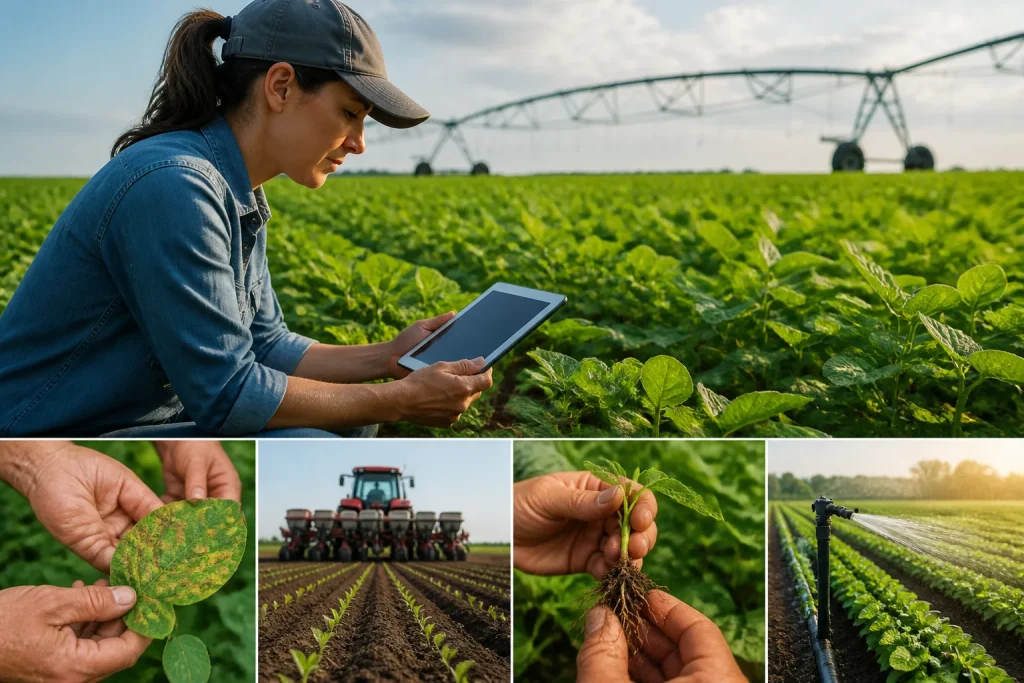
Every farming season begins with a simple, powerful dream. You stand at the edge of your field, looking at the freshly tilled earth, and picture a lush, green canopy that ultimately yields a bountiful harvest. However, seasoned growers in India know that hidden threats can easily disrupt this vision. Plant diseases can strike quietly, turning a promising season into an expensive battle.
While total biological stresses, including weeds, insects, and pests, account for roughly one third of total crop losses, plant diseases specifically are estimated to cause about 20% to 26% of Indian crop yield losses. These figures, supported by major Indian agricultural institutions like the Indian Council of Agricultural Research (ICAR) and Punjab Agricultural University (PAU), highlight how critical it is to protect your fields from infection.
Waiting for visible signs of plant disease, such as yellowing leaves, dark spots, or rotting stems, is a highly risky approach. In modern agriculture, reacting to an outbreak after it takes hold is often too late and far too costly. Instead, adopting proactive crop disease prevention is your best pathway to success. By utilizing cost-effective, budget-friendly digital tools and combining them with time-tested agronomic practices, you can protect your fields and build a sustainable legacy for generations.
With smart, structured planning, you can easily shift from reactive defense to proactive prevention. This step-by-step field guide covers everything from seed selection to post-harvest management, showing you how to secure high-value yields without breaking the bank.
Why Prone Fields Need a Proactive Approach
Many of our most popular cash crops, such as cotton, tomatoes, and chillies, are incredibly vulnerable to environmental and biological stress. When hot, humid weather hits during the monsoon or early winter, fungi, viruses, and bacteria multiply rapidly. Once a pathogen systemically infects a crop, the damage cannot be undone.
For example, diseases like paddy dwarfing disease or viral leaf curl in horticultural crops have no direct cure once the plant is infected. The only way to save your yield, and your hard-earned money, is by stopping the disease vector or the pathogen before it ever gains a foothold.
Moving to proactive management does not mean you have to buy expensive enterprise-level sensor systems or contract high-cost consultancies. The modern era of smart farming makes advanced agricultural knowledge accessible to every single grower. Through AgriFarming, you have access to precise, free agricultural calculators and an intelligent, instant AI assistant named AgriGPT to build reliable, affordable crop calendars.
Unlike complex platforms that focus only on theory, AgriFarming uniquely integrates easy-to-use digital calculators with practical crop schedules and our direct AI advisory helper, AgriGPT. This ensures you get actionable insights suited for your local conditions, kept inside a budget that respects your margins.
Phase 1: Planning and Seed Selection (Pre-Planting)
Proactive disease prevention begins long before your seeds ever touch the soil. The decisions you make during the pre-planting phase lay the foundation for your crop’s natural immune system.
1. Optimize Spatial Planning and Seed Rate
Planting too closely is one of the most common causes of fungal outbreaks. High-density planting creates a dense leaf canopy that traps humidity and prevents sunlight from drying the wet soil. This damp microclimate is a perfect breeding ground for devastating fungi like powdery mildew, downy mildew, and phytophthora.
To prevent this, you must calculate the optimal plant population. You can use our specialized seed rate estimation tools to plan the exact crop layout. Proper row spacing allows gentle breezes to pass through the lower canopy, naturally reducing the moisture that pathogens rely on to survive.
2. Practice Soil Solarization
Before sowing, harness the free power of the sun to sterilize your soil. Covering your moist fields with transparent polyethylene sheets during the hot summer months raises soil temperatures to levels that kill off microscopic fungal spores, harmful nematodes, and weed seeds. Soil solarization is a brilliant, zero-chemical prevention method that saves you thousands of rupees on expensive synthetic soil drenches later in the season.
3. Choose Resistant Varieties and Healthy Seed Stock
Always select high-quality, certified disease-resistant crop varieties that are well-suited for your local climate and soil conditions. Investing in seeds with built-in resistance is the cheapest and most reliable way to avoid widespread crop failure. Avoid sourcing unverified seed stock, which can easily introduce devastating pathogens into clean soil.
Phase 2: Protecting Your Sowing and Early Growth
Once the seed is in the ground, it enters its most vulnerable stage. Sprouting seeds and young seedlings have very delicate root systems that can easily fall prey to soil-borne pathogens.
1. Boost Your Seed Treatment
Treating seeds before planting is a highly effective way to protect your young plants. You can use a mix of commercial and organic practices:
- Biological Inoculants: Direct organic bio-control agents such as Trichoderma viride or Pseudomonas fluorescens can be mixed with your seed stock. These helpful microbes colonize the roots of your young plants, forming a physical shield against harmful soil fungus.
- Hot Water Treatments: For certain vegetable crops, soaking seeds in hot water (around 50 degrees Celsius for 20 minutes) can eliminate seed-borne bacterial pathogens without needing expensive chemical agents.
2. Implement an Organic Cultivation Boundary
Applying organic cultivation methods during the vegetative growth phase keeps your soil healthy and resilient. Planting diverse cover crops and setting up border buffers around your plots naturally prevents wind-borne fungal spores and migrating insect vectors from reaching your primary cash crops.
3. Set Up an Early Monitoring and Vector Control Plan
Many crop diseases, especially destructive viral infections, are carried by tiny insect vectors like thrips, aphids, whiteflies, and plant hoppers. For instance, if you are reading our comprehensive cotton farming guide or planning a cycle of tomato farming in India, you will find that sap-sucking pests are the main drivers of disease spread.
To keep these disease-carrying pests under control, you need a balanced pest management schedule. You can combine organic solutions like neem oil and yellow sticky traps with targeted commercial treatments. When insect populations cross safe limits, utilizing precise, modern insect control formulations like Syngenta Simodis Insecticide in your crop protection routine can stop disease-spreading insects in their tracks.
Phase 3: Safeguarding the Reproductive and Flowering Stages
The flowering and fruiting stage is the high-risk window for crop diseases. This is when your plants direct most of their energy toward forming yields, leaving fewer resources to fight off infections.
 ┌──────────────────────────────────────────┐
 │ The Crop Disease Triangle │
 └──────────────────────────────────────────┘
 ▲
 / \
 / \
 / \
 Host Susceptibility Environmental Conditions
 (e.g., Weak Plant) (e.g., Rainy/Humid Monsoon)
 / \
 /___________\
 Pathogen
 (e.g., Fungal Spore, Virus Vector)
To break this disease triangle, you need to actively manage the environment and support your crop’s natural defenses:
- Smart Irrigation: Avoid overhead sprinkler irrigation during humid periods. Wet leaves make it very easy for fungal spores to germinate and spread. Utilize drip irrigation to deliver water directly to the root zone, keeping the foliage dry.
- Regular Scout Training: Make it a habit to inspect your fields at least twice a week during reproductive phases. Check the underside of leaves for fuzzy fungal growth, rusty spots, or dark margins.
- Strategic Pruning: In high-value vegetable crops, removing the old, lower leaves that touch the damp soil improves airflow. For detailed instructions on managing high-yield horticultural plots, you can read our chilli farming guide or explore local strategies like tomato farming per acre in Telangana. If you expect to scale your vegetable production, checking the general tomato farming yield and profit metrics will help you adjust your input budgets accordingly.
Phase 4: Harvesting and Post-Harvest Disease Management
Your hard work does not end once the crops are ready for harvest. Many rot-causing pathogens can lie dormant on the fruit, waiting to destroy your yield during transport and storage.
- Dry and Cool Harvesting: Always harvest during dry weather. Excessive moisture during harvest makes the produce prone to bacterial soft rot and mold. Minimize physical bruising and skin tears, which act as open wounds for rot bacteria to enter.
- Sanitize Tools and Crates: Clean your harvesting shears, collection crates, and tarpaulins thoroughly. Leftover soil and plant debris on farm equipment are common sources of contamination that can quickly ruin a fresh harvest.
- Evaluate Your Success: Once the crops are safely harvested, it is time to measure your financial results. To maximize your gains on a budget, you can read our guide on profitable farming in India. Input your seasonal costs and market prices into a crop profit calculator to see your exact return on investment. Assessing these final numbers shows you just how much money your proactive prevention steps saved you.
How Technology Democratizes Crop Disease Prevention
Historically, small-scale farmers in India found it difficult to access the same advanced agricultural insights as large enterprise farms. Today, digital tools have changed the game, putting the power of precision agriculture directly into your pocket.
At AgriFarming, we are proud to offer budget-friendly digital solutions designed to help you increase efficiency and cut input costs:
- AgriGPT AI Advisor: Instead of hiring expensive crop consultants, you can chat with AgriGPT, our advanced chemical-and-organic AI search tool. It provides immediate, practical solutions for identifying crop symptoms, applying crop protection safely, and planning organic cultivation schedules.
- Interactive Budgeting Tools: Whether you are analyzing your expenses with the crop profit calculator india 2026 or using the chilli farming profit calculator, knowing your margins beforehand helps you allocate seed and fertilizer investments smartly.
- Diversification Guides: If you want to explore new, highly lucrative agri-business ideas, we offer step-by-step guides on niche opportunities, such as setting up indoor cultivation and calculating your potential mushroom farming monthly income.
- Integrated Farm Management: We help you balance all areas of your farm. From optimizing soil health in agriculture to managing crops in horticulture, and even providing tips for livestock care to generate high-quality organic manure, our platform is your complete farming toolkit.
Proactive Crop Disease Prevention Timeline
This simple timeline chart summarizes the key tasks you should complete during each phase of the growing season:
| Phase | Key Prevention Action | Why It Matters | Resource / Tool to Use |
|---|---|---|---|
| Pre-Planting | Soil solarization & seed planning | Eliminates soil-borne pathogens; ensures optimal row spacing | Seed rate estimation tool |
| Sowing | Seed treatment with Trichoderma | Protects delicate roots from rot-causing fungi | AgriFarming guides |
| Vegetative | Spotting vectors & setting sticky traps | Prevents sap-sucking insects from spreading viruses | Pest management schedule |
| Flowering | Pruning old leaves & drip irrigation | Keeps leaves dry and improves airflow inside the canopy | AgriGPT |
| Harvesting | Sanitizing crates & careful handling | Stops dormant pathogens from causing post-harvest rot | Horticulture guides |
| Post-Harvest | Financial review of disease management | Measures cost savings and overall cropping profit | Crop profit calculator |
Frequently Asked Questions
What is the most cost-effective way to prevent crop diseases?
Using a combination of preventive cultural practices is the most economical strategy. This includes rotating your crops with non-susceptible families, solarizing your soil during the hot summer months, spacing plants correctly using seed rate estimation tools, and sourcing clean, certified seeds.
How does AgriGPT help me identify plant diseases?
AgriGPT acts as your personal AI farming assistant. You can describe your crop’s visible signs, and AgriGPT will instantly analyze the most likely cause. It then suggests both organic cultivation options and affordable chemical treatment methods, saving you the expense of hiring a private agricultural consultant.
Can viral crop diseases be cured once they infect a plant?
No. Viral infections, such as leaf curl virus or dwarfing disease, cannot be cured once they infect the plant’s vascular system. Your prevention plan must focus on controlling the insect vectors that carry the virus (like whiteflies and thrips) using sticky traps and target-specific insect controls.
Is overhead sprinkling bad for crop disease control?
Yes, when foliage remains wet for long periods, it creates a welcoming environment for fungal spores to germinate and infect leaves. Switching to drip irrigation keeps leaves dry and directly waters the roots, naturally reducing fungal disease outbreaks.
How do I design a crop rotation schedule to prevent soil disease?
Try to avoid planting crops from the same family, such as tomatoes, eggplants, and peppers, in the same soil back to back. Rotating these crops with grains, pulses, or brassicas interrupts the life cycle of soil-borne pathogens, starving them out naturally.
Transform Your Fields with AgriFarming 🌾
Proactive disease prevention is not a luxury, it is a smart, budget-friendly approach to securing high-value yields. By combining your hands-on field experience with modern digital planning tools and interactive calculators, you can minimize chemical costs, maximize market yields, and keep more profit in your pocket.
Let’s grow together. With the right digital tools in your hands, you can transform your fields and build a sustainable legacy for generations.
Browse our affordable range of bio-inputs in the AgriFarming shop to start protecting your crops today. If you have any specific questions about crop nutrition or disease cycles, feel free to chat with AgriGPT or reach out to our team directly through our contact page. To learn more about our mission to support Indian growers with high-value agricultural calculators and expert guidance, visit our about us page.
References & Suggested Reading
- ICAR – Indian Council of Agricultural Research: Guidelines on Integrated Pest and Disease Management (IPDM) in horticultural crops.
- Punjab Agricultural University (PAU): Reports on paddy dwarfing viral vector management and seasonal fungal mitigation.
- FAO – Food and Agriculture Organization: Crop health standards, soil solarization, and clean seed systems for smallholders.