
सीमित स्थान और न्यूनतम लागत में कृषि व्यवसाय: शुरुआती उद्यमियों के लिए व्यावहारिक एवं वैज्ञानिक मार्गदर्शिका
आधुनिक युग में कृषि करने के लिए अब सैकड़ों एकड़ के विशाल खेतों की अनिवार्यता समाप्त हो चुकी है। आज के समय में नवीन तकनीकों, नियंत्रित वातावरण और वैज्ञानिक प्रबंधन के मेल से आप अपने घर की छत, गैरेज, पिछले हिस्से (backyard) या एक छोटे से किराए के भूखंड पर भी एक अत्यंत सफल और लाभकारी कृषि व्यवसाय शुरू कर सकते हैं। विशेष रूप से नए उद्यमियों (beginners) के लिए, जो बहुत बड़े वित्तीय जोखिम नहीं उठाना चाहते, छोटे स्थान और कम लागत वाले कृषि मॉडल सबसे सुरक्षित और व्यावहारिक प्रवेश द्वार साबित होते हैं।
यह विस्तृत मार्गदर्शिका आपको ऐसे ही छह उच्च-लाभकारी कृषि व्यवसायों की तकनीकी, वित्तीय और व्यावहारिक बारीकियों से परिचित कराएगी, जिन्हें आप सीमित संसाधनों के साथ आसानी से शुरू कर सकते हैं।
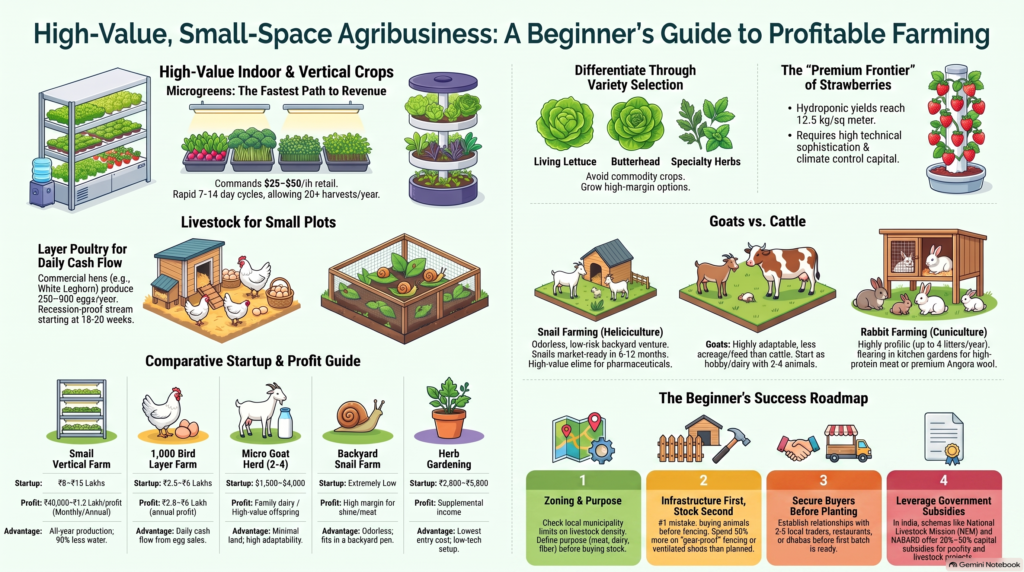
भाग 1: वर्टिकल फार्मिंग (Vertical Farming) – तकनीक, फसलें और लागत विश्लेषण
वर्टिकल फार्मिंग या ऊर्ध्वाधर खेती आज के शहरी कृषि परिदृश्य की सबसे क्रांतिकारी खोज है। इस पद्धति के तहत फसलों को पारंपरिक समतल जमीन पर फैलाने के बजाय एक के ऊपर एक व्यवस्थित रैक या परतों (stacked layers) में उगाया जाता है। यह तकनीक मुख्य रूप से नियंत्रित पर्यावरण कृषि (Controlled Environment Agriculture – CEA) पर आधारित होती है, जहाँ प्रकाश, तापमान, आर्द्रता और पोषक तत्वों को कृत्रिम रूप से नियंत्रित किया जाता है।
वर्टिकल फार्मिंग क्यों है सर्वश्रेष्ठ?
- अत्यधिक स्थान दक्षता: यह तकनीक पारंपरिक खेती की तुलना में 100 गुना अधिक तक पैदावार दे सकती है, क्योंकि यह केवल चौड़ाई नहीं बल्कि ऊंचाई का भी पूर्ण उपयोग करती है। इसे किसी भी बंद गोदाम, खाली पड़े मकान या शिपिंग कंटेनर में स्थापित किया जा सकता है।
- पानी की भारी बचत: हाइड्रोपोनिक्स (बिना मिट्टी के पानी में उगाना) या एरोपोनिक्स (हवा में पोषक तत्वों की फुहार से उगाना) प्रणालियों के उपयोग के कारण इसमें पारंपरिक खेती की तुलना में लगभग 90% कम पानी की आवश्यकता होती है।
- मौसम से स्वतंत्रता: मौसम की अनिश्चितताओं से पूरी तरह मुक्त होने के कारण, आप साल के 52 सप्ताह लगातार फसल प्राप्त कर सकते हैं।
वर्टिकल फार्मिंग के लिए सबसे उपयुक्त और अत्यधिक मुनाफे वाली फसलें
सभी फसलें वर्टिकल फार्मिंग के आर्थिक ढांचे के अनुकूल नहीं होती हैं। सफल होने के लिए आपको उन फसलों का चयन करना होगा जिनकी चक्र अवधि (cycle time) कम हो और बाजार मूल्य अधिक हो।
- माइक्रोग्रीन्स (Microgreens): यह वर्टिकल फार्मिंग में सबसे तेजी से और सबसे अधिक मुनाफा देने वाली फसल है। इनके बीज अंकुरित होने के मात्र 7 से 14 दिनों के भीतर कटाई के लिए तैयार हो जाते हैं। खुदरा बाजार में ये $25 से $50 (लगभग ₹2,000 से ₹4,000) प्रति पाउंड की दर से बिकते हैं। एरोपोनिक विधि से उगाए गए माइक्रोग्रीन्स बिना धोए 23 दिनों तक सुरक्षित रह सकते हैं, जो व्यापारियों के लिए बहुत फायदेमंद है।
- कुलीन जड़ी-बूटियाँ (Culinary Herbs): तुलसी (basil), पुदीना (mint), धनिया (cilantro), और अजवायन (parsley) जैसी जड़ी-बूटियों की मांग सालभर बनी रहती है। बाजार में इनका थोक मूल्य $10 से $15 (लगभग ₹800 से ₹1,200) प्रति पाउंड होता है, और एक अच्छी तरह से प्रबंधित सेटअप प्रति वर्ग फुट प्रति वर्ष $25 या उससे अधिक का राजस्व आसानी से दे सकता है।
- स्पेशलिटी लेट्यूस (Specialty Lettuce): सामान्य सलाद पत्ता उगाने के बजाय ‘बटरहेड लेट्यूस’ या ‘लिविंग लेट्यूस’ (जिसमें जड़ें साथ में बेची जाती हैं) जैसी उन्नत किस्में उगाना अधिक लाभदायक है। जड़ों के साथ बेचे जाने के कारण यह लंबे समय तक ताजा रहता है और उपभोक्ताओं को इसकी स्थानीय गुणवत्ता के लिए अतिरिक्त भुगतान करने में कोई आपत्ति नहीं होती।
- स्ट्रॉबेरी (Strawberries): बहु-स्तरीय वर्टिकल सेटअप में स्ट्रॉबेरी की पैदावार प्रति वर्ग मीटर 12.5 किलोग्राम तक पहुंच सकती है। हालांकि, इसमें परागण (pollination) और प्रकाश की सटीक आवश्यकताओं के कारण अधिक तकनीकी दक्षता की आवश्यकता होती है।
भारत में वर्टिकल फार्मिंग की स्थापना लागत (अनुमानित बजट)
| सेटअप का पैमाना | आवश्यक स्थान (वर्ग फुट) | अनुमानित लागत (भारतीय रुपये में) |
|---|---|---|
| लघु स्तर (Home/Pilot Project) | 500 – 800 | ₹8,00,000 – ₹15,00,000 |
| मध्यम स्तर (Commercial Setup) | 1,000 – 3,000 | ₹20,00,000 – ₹40,00,000 |
| बड़ा व्यावसायिक स्तर | 5,000 से अधिक | ₹50,00,000 – ₹1.5 करोड़ |
नोट: इस लागत में रैक, एलईडी ग्रो लाइट्स, सिंचाई और पोषक तत्व प्रणालियां, एयर कंडीशनर, डीह्यूमिडिफायर, बीज और बुनियादी स्वचालन (automation) उपकरण शामिल हैं.
मासिक संचालन व्यय और लाभ की गणित (1,000 वर्ग फुट सेटअप का उदाहरण)
- मासिक उत्पादन (Yield): 800 से 1,200 किलोग्राम ताजी हरी सब्जियां/हर्ब्स।
- मासिक राजस्व (Revenue): ₹1,00,000 से ₹2,50,000 (औसत बिक्री मूल्य ₹120–₹250 प्रति किलोग्राम के आधार पर)।
- मासिक संचालन खर्च: ₹50,000 से ₹1,50,000 (बिजली, पानी, पोषक तत्व, लेबर और रखरखाव)।
- शुद्ध लाभ (Net Profit): ₹40,000 से ₹1,20,000 प्रति माह।
- निवेश वापसी (ROI Timeline): आमतौर पर 18 से 30 महीने।
सरकार इस आधुनिक खेती को बढ़ावा देने के लिए राष्ट्रीय बागवानी मिशन (NHM), राष्ट्रीय कृषि विकास योजना (RKVY) और नाबार्ड (NABARD) के माध्यम से अप्रत्यक्ष रूप से 40% से 60% तक की सब्सिडी सहायता भी प्रदान करती है।
भाग 2: घर के पिछले हिस्से में लेयर मुर्गी पालन (Backyard Layer Poultry Farming)
अंडा उत्पादन के उद्देश्य से मुर्गियों को पालना (Layer Poultry) एक ऐसा व्यवसाय है जिसके उत्पाद ‘मंदी-रोधी’ (recession-proof) माने जाते हैं। भारत में अंडों की दैनिक मांग अत्यंत सुसंगत है, जो इस व्यवसाय को नियमित और स्थिर दैनिक आय का सबसे बेहतरीन स्रोत बनाती है।
देशी मुर्गियों की उन्नत किस्में बनाम स्थानीय नस्लें
ग्रामीण और अर्ध-शहरी इलाकों में पारंपरिक देशी मुर्गियाँ प्रति वर्ष केवल 70 से 80 अंडे ही दे पाती हैं। लेकिन यदि आप वैज्ञानिक अनुसंधान द्वारा विकसित उन्नत ग्रामीण नस्लों का चयन करते हैं, तो आपकी मुर्गियों के जीवित रहने की दर और उत्पादकता दोनों कई गुना बढ़ जाती है।
- उन्नत नस्लें: ‘वनराजा’ (Vanaraja) और ‘ग्रामप्रिया’ (Gramapriya) जैसी नस्लें ग्रामीण और अर्ध-शहरी परिस्थितियों के लिए सबसे बेहतरीन हैं।
- अंडा उत्पादन क्षमता: ग्रामप्रिया प्रति वर्ष 200 से 220 अंडे और वनराजा प्रति वर्ष 200 से 230 अंडे तक दे सकती है। प्रथम अंडा उत्पादन 200 से 230 दिनों की आयु में शुरू होता है।
- शारीरिक विशेषताएँ: इन पक्षियों का वजन परिपक्व होने पर 2.5 से 3.5 किलोग्राम तक हो जाता है। इनमें प्राकृतिक शिकारियों से बचने की बेहतर क्षमता और रोगों के प्रति असाधारण रोग प्रतिरोधक क्षमता होती है।
वाणिज्यिक नस्लों का चयन (Commercial Breeds)
यदि आप विशुद्ध रूप से पिंजरा प्रणाली (cage technology) के माध्यम से व्यावसायिक अंडा उत्पादन करना चाहते हैं, तो निम्नलिखित नस्लें भारत में सबसे सफल हैं:
- व्हाइट लेगहॉर्न (White Leghorn): यह अत्यधिक अंडा देने वाली, गर्मी को सहन करने में सक्षम और पूरे भारत में सबसे लोकप्रिय नस्ल है।
- बीवी-300 (BV-300) और हाय-लाइन ब्राउन (Hy-Line Brown): ये नस्लें विशेष रूप से भूरे रंग के अंडों के लिए जानी जाती हैं और दक्षिण भारत में अत्यधिक लोकप्रिय हैं।
- बबकॉक बी-300 (Babcock B-300): यह मध्यम और ठंडे जलवायु वाले क्षेत्रों के लिए अत्यंत अनुकूल है।
आवास और स्थान का वैज्ञानिक प्रबंधन (ICAR-NIANP दिशा-निर्देश)
मुर्गियों के स्वस्थ विकास और इष्टतम अंडा उत्पादन के लिए आवास व्यवस्था में कड़े मानकों का पालन करना आवश्यक है:
- उम्र के अनुसार स्थान की आवश्यकता (Floor Space):
- 0 से 4 सप्ताह के चूजों के लिए: 0.5 वर्ग फुट प्रति चूजा।
- 4 से 8 सप्ताह के चूजों के लिए: 1.0 वर्ग फुट प्रति चूजा।
- 8 सप्ताह से अधिक और वयस्क मुर्गियों के लिए: 2.0 वर्ग फुट प्रति पक्षी।
- उदाहरण: 1,000 वयस्क मुर्गियों के लिए आपको कम से कम 1,500 से 2,000 वर्ग फुट के शेड की आवश्यकता होगी।
- सुरक्षात्मक रात्रि आश्रय (Night Shelter): मुर्गियों को जंगली जानवरों, कुत्तों और चोरी से बचाने के लिए स्थानीय स्तर पर उपलब्ध सस्ती सामग्रियों से कम से कम 60 सेंटीमीटर की ऊंचाई वाला मजबूत रात्रि शेड बनाना आवश्यक है।
- फर्श और बिछावन (Litter Management): फर्श पर सूखी चूरा (saw dust) या धान की भूसी (paddy husk) की 5 सेंटीमीटर मोटी परत बिछानी चाहिए। इस बिछावन में फंगस नहीं लगना चाहिए और अमोनिया गैस की गंध को रोकने के लिए इसे नियमित अंतराल पर हिलाते-डुलाते रहना चाहिए। बीमारियों और नमी से बचाव के लिए शेड हमेशा जमीन से कम से कम 2 फीट ऊंचे स्थान पर होना चाहिए।
- दिशा और वेंटिलेशन: शेड का निर्माण हमेशा पूर्व-पश्चिम दिशा में होना चाहिए ताकि गर्मियों की गर्म हवाओं और सर्दियों के अत्यधिक ठंडे झोंकों से पक्षियों को बचाया जा सके, साथ ही सर्दियों में पर्याप्त धूप मिल सके।
आहार और जल प्रबंधन (Feeding & Water Management)
मुर्गियों के चारे का खर्च पोल्ट्री फार्मिंग के कुल खर्च का लगभग 70% होता है। हालांकि, घर के पीछे या मुक्त-श्रेणी (free-range) प्रणाली में मुर्गियाँ बाहर घूमकर केंचुए, कीड़े-मकोड़े, घास के बीज, बचे हुए अनाज और रसोई के कचरे को खाकर अपनी प्रोटीन और खनिज आवश्यकताओं को पूरा कर लेती हैं, जिससे चारे का खर्च लगभग शून्य हो जाता है।
बेहतर उत्पादन के लिए मुर्गियों को तीन चरणों में संतुलित आहार देना चाहिए:
- स्टार्टर चरण (0-8 सप्ताह): 20-22% प्रोटीन युक्त आहार।
- ग्रोवर चरण (8-18 सप्ताह): 16-18% प्रोटीन और अधिक फाइबर युक्त आहार।
- लेयर चरण (18 सप्ताह के बाद): 16% प्रोटीन और अंडों के छिलके को मजबूत बनाने के लिए 3.5% से 4% कैल्शियम युक्त आहार। चूजों को मजबूत बनाने के लिए दो सप्ताह की आयु के बाद से छह सप्ताह तक 2% कैल्शियम का घोल देना अत्यंत लाभदायक होता है।
पानी के मामले में मुर्गियाँ अत्यंत संवेदनशील होती हैं। वयस्क मुर्गियों को हमेशा स्वच्छ और ताजा पानी उपलब्ध होना चाहिए। सामान्य परिस्थितियों में, 5 पक्षियों के लिए प्रतिदिन केवल 1 लीटर पानी ही पर्याप्त होता है।
1,000 मुर्गियों के लेयर फार्म की प्रारंभिक लागत और लाभ का विश्लेषण (2026 के आंकड़ों के अनुसार)
| मद (Cost Head) | अनुमानित खर्च (भारतीय रुपये में) |
|---|---|
| शेड का निर्माण (₹200–₹250 प्रति वर्ग फुट) | ₹1,50,000 – ₹2,50,000 |
| एक दिन के चूजे (Day-Old Chicks – DOC) @ ₹50–₹70 | ₹25,000 – ₹70,000 |
| पिंजरा प्रणाली (Cages) और बुनियादी उपकरण | ₹80,000 – ₹1,50,000 |
| पहले 18 सप्ताह का चारा (अंडा देने से पहले का खर्च) | ₹60,000 – ₹1,00,000 |
| टीकाकरण और दवाइयाँ | ₹10,000 – ₹20,000 |
| अन्य विविध खर्च और बिजली | ₹15,000 – ₹25,000 |
| कुल अनुमानित प्रारंभिक निवेश | ₹3.5 Lakh – ₹6 Lakh |
लाभ और आमदनी का गणित
- वार्षिक अंडा उत्पादन: प्रति मुर्गी लगभग 280-300 अंडे। 1,000 मुर्गियों से कुल 2,80,000 से 3,00,000 अंडे सालाना मिलेंगे।
- उत्पादन लागत प्रति अंडा: लगभग ₹3.50।
- थोक बिक्री मूल्य (Farm-Gate Price): ₹4.50 से ₹5.50 प्रति अंडा।
- प्रति अंडा शुद्ध लाभ: ₹1.00 से ₹2.00।
- सालाना शुद्ध मुनाफा: ₹2.8 लाख से ₹6 लाख तक।
- अतिरिक्त आय: सूखी बीट (poultry manure) उत्कृष्ट जैविक खाद है, जो ₹3 से ₹5 प्रति किलो की दर से बिकती है। 1,000 मुर्गियों से प्रति माह 500-700 किलो बीट मिलती है, जिससे ₹1,500 से ₹3,500 की अतिरिक्त मासिक आय होती है। साथ ही, 72-80 हफ्तों के बाद बूढ़ी मुर्गियों (spent hens) को मांस के रूप में बेचकर पूरा निवेश पुनः प्राप्त किया जा सकता है।
सरकारी योजनाएं और सहायता
महिला उद्यमियों और स्वयं सहायता समूहों (SHGs) को बढ़ावा देने के लिए भारत सरकार की राष्ट्रीय पशुधन मिशन (NLM) योजना के तहत 25% से 50% तक की कैपिटल सब्सिडी प्रदान की जा रही है। सामान्य वर्ग के आवेदकों को नाबार्ड (NABARD) और पोल्ट्री फार्म लोन योजना के अंतर्गत 25% और अनुसूचित जाति/जनजाति के आवेदकों को 33% तक की सब्सिडी मिलती है।
भाग 3: जड़ी-बूटियों की खेती और होम नर्सरी (Herb Gardening & Plant Nursery)
जड़ी-बूटियों और सजावटी पौधों का व्यवसाय उन लोगों के लिए सर्वोत्तम है जिनके पास बहुत ही सीमित स्थान है, जैसे घर की बालकनी, छत या एक छोटा सा गैरेज।
नर्सरी व्यवसाय की शुरुआत: लागत और बजट
| मद | अनुमानित खर्च (INR) |
|---|---|
| उच्च गुणवत्ता वाले बीज/कलम (Saplings) | ₹500 – ₹1,000 |
| गमले, ग्रो बैग और ट्रे (Pots & Containers) | ₹1,000 – ₹2,000 |
| लोमी मिट्टी, कोकोपीट और केंचुआ खाद (Vermicompost) | ₹500 – ₹1,000 |
| मैन्युअल सिंचाई उपकरण (Watering Tools) | ₹300 – ₹500 |
| अन्य विविध खर्च | ₹500 – ₹1,000 |
| कुल प्रारंभिक निवेश | ₹2,800 – ₹5,500 |
उच्च मांग वाले पौधों का चयन
- औषधीय एवं हर्ब्स: तुलसी (Tulsi), पुदीना (Mint), धनिया (Coriander), करी पत्ता (Curry leaves), और एलोवेरा (Aloe vera)। ये पौधे सालभर मांग में रहते हैं और भारतीय घरों में दैनिक रूप से उपयोग किए जाते हैं।
- सजावटी पौधे (Ornamentals): मनी प्लांट (Money plant), स्नेक प्लांट (Snake plant), पीस लिली (Peace lily), और गेंदा (Marigold/Genda)। शहरी क्षेत्रों में इनकी मांग उपहार देने और घरों की सजावट के लिए अत्यधिक है।
बाजार और बिक्री के तरीके (Market Channels)
जड़ी-बूटियों की सबसे बड़ी खासियत यह है कि इन्हें कई रूपों में बेचा जा सकता है:
- ताजी कटी हुई हर्ब्स (Fresh-Cut): इन्हें सीधे स्थानीय सब्जी विक्रेताओं, सुपरमार्केट या सीधे पास के रेस्तरां और शेफ को आपूर्ति की जा सकती है।
- गमले में लगे जीवित पौधे (Potted Plants): नर्सरी, गार्डन सेंटर्स या स्थानीय साप्ताहिक बाजारों में गमलों सहित पौधों को बेचना सबसे अधिक मुनाफा देता है।
- सूखी जड़ी-बूटियाँ (Dried Herbs): तुलसी, पुदीना या लेमनग्रास को सुखाकर हर्बल चाय निर्माताओं, साबुन बनाने वाले कुटीर उद्योगों या सीधे उपभोक्ताओं को आकर्षक पैकेजिंग में बेचा जा सकता है।
परिचालन जोखिम और सुरक्षा सावधानी
ताजी जड़ी-बूटियाँ अत्यधिक संवेदनशील और जल्दी खराब होने वाली (highly perishable) होती हैं। एफडीए (FDA) के दिशा-निर्देशों के अनुसार, जड़ी-बूटियों को हमेशा सिंचाई के पानी के सीधे छींटों, पालतू जानवरों के संपर्क और दूषित उपकरणों से बचाना चाहिए क्योंकि इन्हें बिना पकाए सीधे खाया जाता है। कटाई के बाद इन्हें सीधे धूप से दूर रखें और पत्तियों को रगड़ या खरोंच से बचाएं।
भाग 4: व्यावसायिक खरगोश पालन (Rabbit Farming / Cuniculture)
खरगोश पालन (Cuniculture) एक अत्यंत अनोखा, कम लागत वाला और अत्यधिक उत्पादक पशुपालन व्यवसाय है। खरगोश बहुत तेजी से प्रजनन करने वाले जीव हैं जो रसोई के कचरे, हरी घास और सब्जियों के छिलकों पर आसानी से पल सकते हैं।
खरगोश पालन के प्रमुख लाभ
- तेज प्रजनन चक्र: खरगोशों की प्रजनन क्षमता असाधारण होती है। एक मादा खरगोश (doe) प्रति वर्ष औसतन 4 बार बच्चों को जन्म दे सकती है, जिससे प्रति वर्ष लगभग 20 विपणन योग्य बच्चे (fryers) प्राप्त होते हैं।
- तेज विकास दर: नवजात बच्चे (kits) मात्र 6 महीनों के भीतर पूर्ण वयस्क होकर बिक्री के लिए तैयार हो जाते हैं, जिससे निवेश पर बहुत जल्दी रिटर्न मिलना शुरू हो जाता है।
- महंगा ऊन (Angora Wool): यदि आप ठंडे पहाड़ी क्षेत्रों में रहते हैं, तो ‘जर्मन अंगोरा’ (German Angora) नस्ल का पालन करके आप प्रति वर्ष प्रति खरगोश 1,000 से 1,200 ग्राम तक अत्यंत उच्च गुणवत्ता वाला ऊन प्राप्त कर सकते हैं, जिसकी वैश्विक बाजारों में भारी मांग है।
आवास और पिंजरे का वैज्ञानिक मानक (TNAU दिशा-निर्देश)
खरगोशों के लिए अनुकूलतम तापमान 10°C से 20°C और सापेक्ष आर्द्रता 55% से 65% के बीच होनी चाहिए। इनके पिंजरों का निर्माण निम्नलिखित विशिष्टताओं के अनुसार किया जाना चाहिए:
| श्रेणी | आवश्यक लंबाई (फुट) | चौड़ाई (फुट) | ऊंचाई (फुट) |
|---|---|---|---|
| नर और मादा के लिए ब्रीडिंग पिंजरा | 2.5 | 2.0 | 1.5 |
| एकल खरगोश के लिए पिंजरा | 2.0 | 1.5 | 1.5 |
| बच्चे देने वाला पिंजरा (Kindling Cage) | 3.0 (2 + 1 बच्चों के लिए) | 1.5 | 1.5 |
पिंजरे के फर्श के लिए हमेशा 14-16 गेज की जाली (mesh size 19×19 mm) का उपयोग करें ताकि खरगोशों के मल-मूत्र आसानी से नीचे गिर सकें और वे संक्रमण (जैसे coccidiosis) से बचे रहें।
आहार प्रबंधन (Feeding Schedule)
खरगोशों को संतुलित पोषण देने के लिए कंसंट्रेट (दानेदार चारा) और सूखी घास (hay) का संयोजन देना चाहिए:
| खरगोश की श्रेणी | कंसंट्रेट दाना (ग्राम/दिन) | सूखी घास (ग्राम/दिन) | हरी घास/सब्जियां |
|---|---|---|---|
| ब्रीडिंग स्टॉक (वयस्क) | 280 | 80 | इच्छानुसार (ad libitum) |
| दूध छुड़ाए बच्चे (7-12 सप्ताह) | 60 | 30 | इच्छानुसार (ad libitum) |
| बढ़ते बच्चे (13-24 सप्ताह) | 90 | 30-40 | इच्छानुसार (ad libitum) |
| वयस्क खरगोश (24 सप्ताह से ऊपर) | 140 | 50-60 | इच्छानुसार (ad libitum) |
हरी सब्जियों में आप बरसीम, अल्फाल्फा, केला और बांस के पत्ते, गोभी-फूलगोभी के डंठल और गाजर-मूली के अवशेष आसानी से दे सकते हैं, जिससे चारे की लागत न्यूनतम रह जाती है।
भाग 5: वैज्ञानिक घोंघा पालन (Snail Farming / Heliciculture)
घोंघा पालन या हेलिसिकल्चर (Heliciculture) पश्चिमी देशों में सदियों से प्रसिद्ध है, लेकिन अब भारत और अन्य एशियाई देशों में यह एक अत्यधिक मुनाफे वाले निर्यात व्यवसाय के रूप में उभर रहा है।
घोंघा पालन के अनोखे व्यावसायिक लाभ
- दुर्गंध-मुक्त और शांत: सूअर या मुर्गी पालन के विपरीत, घोंघों के मल या बाड़े से कोई दुर्गंध नहीं आती है। इसलिए इन्हें घने शहरी इलाकों या अपने घर के पिछले हिस्से में भी बिना किसी पड़ोसी की शिकायत के पाला जा सकता है।
- दोहरा राजस्व स्रोत (Double Income): घोंघे के स्वादिष्ट मांस (Escargot) की मांग यूरोपीय देशों में बहुत अधिक है। इसके अलावा, घोंघे का चिपचिपा स्राव या लार—जिसे ‘स्नेल स्लाइम’ (Snail Slime) कहा जाता है—कॉस्मेटिक और फार्मास्युटिकल उद्योगों में एंटी-एजिंग क्रीम और दवाएं बनाने के लिए अत्यंत महंगे दामों पर खरीदी जाती है।
- उच्च फीड कन्वर्शन अनुपात: घोंघों की भोजन परिवर्तन क्षमता अविश्वसनीय है। मात्र 2 किलोग्राम साधारण सब्जी कचरे या कैल्शियम युक्त आहार को खाकर घोंघे 1 किलोग्राम शुद्ध मांस का उत्पादन करते हैं।
आवास और मिट्टी का वैज्ञानिक चयन
घोंघे बेहद संवेदनशील और ठंडे खून वाले जीव हैं जो बहुत जल्दी निर्जलीकरण (dehydration) का शिकार हो जाते हैं। इसलिए इनके आवास और मिट्टी का प्रबंधन बहुत सावधानी से किया जाना चाहिए:
- मिट्टी का चयन (Soil Quality): घोंघों के जीवन की सभी गतिविधियां जैसे चलना, अंडे देना और पानी पीना मिट्टी पर ही होती हैं। मिट्टी हमेशा बलुई-दोमट (sandy-loam) होनी चाहिए जिसमें 20% से 40% कार्बनिक पदार्थ (organic matter) मौजूद हो। मिट्टी कभी भी अत्यधिक अम्लीय (acidic) या चिकनी (clayey) नहीं होनी चाहिए। घोंघों के खोल (shell) के निर्माण के लिए मिट्टी में प्रचुर मात्रा में कैल्शियम कार्बोनेट का होना आवश्यक है।
- बाड़े का निर्माण (Snailery Construction): कंक्रीट या लकड़ी के बक्सेनुमा बाड़े (pens) बनाएं जिनकी गहराई कम से कम 12 इंच हो। घोंघों को भागने से रोकने और मच्छरों, चींटियों व चूहों जैसे शिकारियों से बचाने के लिए बाड़े को बारीक जाली (wire mesh) से ढकना अनिवार्य है।
- पालन घनत्व (Rearing Density): अत्यधिक भीड़-भाड़ होने से घोंघों का विकास रुक जाता है और वे अंडे देना बंद कर देते हैं। वैज्ञानिक मानकों के अनुसार, इष्टतम विकास के लिए प्रति वर्ग मीटर क्षेत्र में अधिकतम 1 से 1.7 किलोग्राम वजन (लगभग 15 वयस्क घोंघे) ही रखे जाने चाहिए।
- आहार एवं नमी: घोंघों को केला, पपीता, सलाद पत्ता और बंदगोभी के छिलके बेहद पसंद हैं। इनके खोल को मजबूत और मोटा बनाने के लिए चारे में 15% से 20% तक पिसा हुआ चूना पत्थर (limestone), अंडे के छिलके का पाउडर या सीप का चूरा (crushed oyster shell) अवश्य मिलाएं। पानी का छिड़काव हमेशा सुबह या शाम को तापमान ठंडा होने पर ही करें। गर्म दोपहर में पानी छिड़कने से घोंघे बाहर आ जाते हैं और तेज धूप के कारण मर जाते हैं।
लघु-स्तरीय घोंघा पालन का वित्तीय ढांचा (2,000 वर्ग मीटर मॉडल के अनुसार)
- प्रारंभिक निवेश: बाहरी फेंसिंग, जालीदार विभाजन (Helitex), ब्रीडिंग स्टॉक (लगभग 13,475 परिपक्व घोंघे), सिंचाई के लिए फॉग स्प्रे स्प्रिंकलर और मिट्टी जुताई उपकरण सहित कुल लागत लगभग 9,400 यूरो (लगभग ₹8.5 लाख से ₹9 लाख) आती है।
- सालाना उत्पादन: प्रति वर्ग मीटर लगभग 2.2 किलोग्राम के हिसाब से कुल 4,366 किलोग्राम विपणन योग्य लाइव घोंघे प्राप्त होते हैं।
- वार्षिक राजस्व: लाइव घोंघों की थोक बिक्री दर औसतन 3.5 यूरो (लगभग ₹320) प्रति किलोग्राम होने पर कुल बिक्री राजस्व लगभग 15,300 यूरो (लगभग ₹14 लाख) प्राप्त होता है।
- सालाना खर्च: भूमि की जुताई, कीटनाशक नियंत्रण (Malathion 5%), खाद और चारे के पौधों के बीज (जैसे सरसों, चुकंदर, सूरजमुखी) पर कुल परिचालन खर्च केवल 10,476 MDL (लगभग ₹50,000) आता है।
- शुद्ध मुनाफा: सभी करों, घिसावट (depreciation) और प्रशासनिक खर्चों को काटकर पहले वर्ष से ही लगभग 12,130 यूरो (लगभग ₹11 लाख) का शुद्ध लाभ प्राप्त किया जा सकता है। यदि आप बाड़े का आकार बढ़ाकर 10,000 वर्ग मीटर (1 हेक्टेयर) कर देते हैं, तो यह मुनाफा सीधे 4 से 5 गुना बढ़ जाता है।
भाग 6: लघु-स्तरीय बकरी पालन (Micro-Scale Goat Farming)
बकरियों को ‘गरीब की गाय’ कहा जाता है क्योंकि ये आकार में छोटी होती हैं, इनके रखरखाव का खर्च न्यूनतम होता है, और ये विपरीत जलवायु परिस्थितियों व दुर्गम क्षेत्रों में भी आसानी से जीवित रह सकती हैं।
उद्देश्य और पैमाने का निर्धारण
बकरी पालन शुरू करने से पहले अपना व्यावसायिक उद्देश्य तय करना आवश्यक है:
- पारिवारिक दूध के लिए: 2 से 4 बकरियां (does) पर्याप्त हैं। इसके लिए प्रारंभिक सेटअप खर्च लगभग $1,500 से $4,000 (₹1.2 लाख से ₹3.3 लाख) आता है।
- व्यावसायिक मांस उत्पादन के लिए: शुरुआती स्तर पर 15 से 30 बकरियों से शुरुआत करें। इसमें लगभग $5,000 से $15,000 (₹4 लाख से ₹12 लाख) का निवेश अपेक्षित है।
- झाड़ी और खरपतवार सफाई सेवा (Brush Clearing): आजकल बड़े बागों और सरकारी जमीनों पर प्राकृतिक रूप से खरपतवार साफ करने के लिए बकरियों को किराए पर देने का नया चलन शुरू हुआ है। 20 से 50 बकरियों के झुंड के साथ इसे शुरू किया जा सकता है।
बुनियादी ढांचा (Infrastructure Standards)
- बकरी-प्रूफ फेंसिंग (Fencing): बकरियां अत्यंत फुर्तीली और भागने में माहिर (escape artists) होती हैं। बकरियों को खेतों से बाहर भागने और आवारा कुत्तों से बचाने के लिए बुनी हुई कँटीली जाली और बिजली के ऑफसेट (woven wire with electric offset) वाली मजबूत बाड़ लगाना अत्यंत आवश्यक है।
- सूखा और हवादार आवास: बकरियों को किसी महंगे वातानुकूलित शेड की आवश्यकता नहीं होती, लेकिन वे गीले स्थान या बारिश को सहन नहीं कर पाती हैं। उनके लिए तीन तरफ से बंद और एक तरफ से खुला शेड (three-sided run-in shed) सबसे बेहतरीन है। प्रत्येक वयस्क बकरी के लिए 15 से 20 वर्ग फुट फर्श क्षेत्र होना अनिवार्य है।
- चारा भंडारण (Feed Storage): बकरियों के चारे (जैसे सूखी घास या भूसे) को हमेशा पूरी तरह से सूखे और चूहों से मुक्त बंद बक्सों में रखें। बकरियां यदि गलती से अनाज के खुले डिब्बे में घुसकर अत्यधिक दाना खा लें, तो उन्हें ‘एंटरोटॉक्सिमिया’ (enterotoxemia – पेट का फूलना और विषाक्तता) रोग हो जाता है, जिससे उनकी मृत्यु हो सकती है।
शुरुआती डॉक्टरों से बचने के लिए 4 अनिवार्य स्वास्थ्य कौशल
बकरियों को अपने फार्म पर लाने से पहले हर पशुपालक को ये चार बुनियादी कौशल अवश्य सीख लेने चाहिए:
- फैमाचा स्कोरिंग (FAMACHA Scoring): बकरियों की आंखों की झिल्ली के रंग की जांच करके शरीर में कीड़े (barber pole worm) के कारण होने वाले एनीमिया (खून की कमी) का पता लगाना। इसी के आधार पर डीवॉर्मिंग (पेट के कीड़े मारने की दवा) का निर्णय लिया जाता है।
- सीडीटी टीकाकरण (CDT Vaccination): यह हर बकरी के लिए सबसे आवश्यक टीका है जो गंभीर जीवाणु संक्रमणों से बचाता है।
- खुरों की छँटाई (Hoof Trimming): हर 4 से 8 हफ्तों में बकरियों के खुरों को काटना और साफ करना अनिवार्य है। ऐसा न करने पर बकरियों में खुर सड़न (foot rot) रोग हो जाता है।
- शारीरिक स्थिति का आकलन (Body Condition Scoring): अपनी बकरियों की रीढ़ और पसलियों को हाथों से छूकर महसूस करें कि वे बहुत अधिक दुबली या अत्यधिक मोटी तो नहीं हैं।
निष्कर्ष और रणनीतिक योजना (Strategic Action Plan)
सीमित स्थान में कृषि व्यवसाय शुरू करने का यह अर्थ कतई नहीं है कि आप पहले ही दिन से हजारों वर्ग फुट का शेड स्थापित कर लें। आपके द्वारा चुने गए किसी भी मॉडल के लिए सफलता का स्वर्ण नियम यही है कि आप हमेशा न्यूनतम पैमाने से शुरुआत करें।
शुरुआती चरण में केवल एक या दो मुख्य फसलों/पशुओं को चुनें, अपने स्थानीय बाजार के ग्राहकों (जैसे रेस्तरां, स्थानीय सुपरमार्केट या उपभोक्ताओं) के साथ मजबूत संबंध स्थापित करें और परिचालन की बारीकियों को स्वयं सीखें। एक बार जब आपका छोटा सा सेटअप स्थिर मुनाफा देना शुरू कर दे, तो आप बैंक ऋण, नाबार्ड सब्सिडी और अपनी स्वयं की संचित पूंजी के बल पर अपने व्यवसाय को व्यावसायिक स्तर पर विस्तारित कर सकते हैं।
📊 मैं आपके चुने हुए किसी भी एक व्यवसाय (जैसे 1,000 पक्षियों का लेयर मुर्गी पालन या 1,000 वर्ग फुट का वर्टिकल फार्मिंग सेटअप) के लिए प्रारंभिक स्थापना खर्चों और मासिक शुद्ध मुनाफे का एक विस्तृत और सटीक वित्तीय बजट कैलकुलेटर तैयार कर सकता हूँ।