

Cotton Farming in India: Complete Cultivation Guide, Cost of Cultivation, Yield, Profit, Fertilizer Schedule, Pest Management, and Harvesting
Introduction
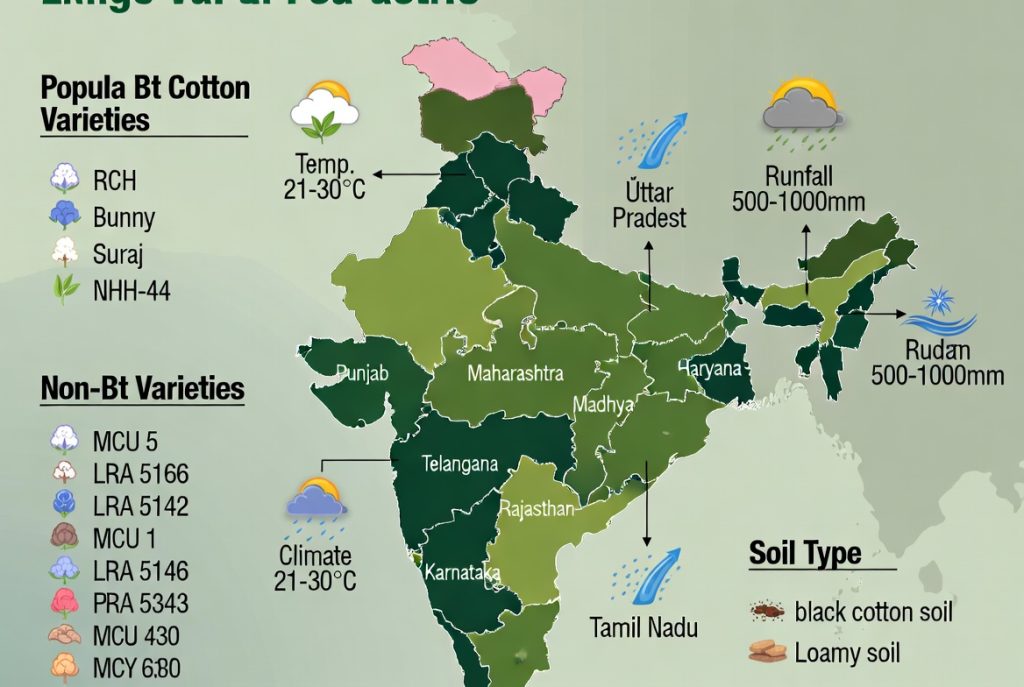
Cotton is one of the most important commercial crops grown in India and is widely known as “White Gold.” India is among the world’s largest cotton producers, with major cultivation in Telangana, Andhra Pradesh, Maharashtra, Gujarat, Karnataka, Madhya Pradesh, Punjab, and Haryana.
Cotton is primarily grown for its fiber, which is used in the textile industry, while cottonseed is utilized for oil extraction and livestock feed.
This comprehensive guide covers cotton cultivation practices, climate requirements, land preparation, varieties, fertilizer management, pest control, yield, and profit analysis.

Importance of Cotton Farming
Cotton contributes significantly to India’s agricultural economy and textile industry.
Benefits include:
- High market demand
- Suitable for rainfed and irrigated farming
- Multiple income sources from lint and seed
- Export potential
- Long storage life compared to many crops
Climate Requirements
Cotton grows best under warm climatic conditions.
Ideal Conditions
- Temperature: 21°C to 30°C
- Rainfall: 500–1000 mm annually
- Bright sunshine during flowering and boll development
- Frost-free growing period
Excessive rainfall and waterlogging can negatively affect crop growth.

Soil Requirements
Cotton performs well in:
- Deep black cotton soils
- Well-drained loamy soils
- Alluvial soils
- Medium black soils
Ideal Soil pH
- 6.0 to 8.0
Good drainage is essential to avoid root diseases.
Popular Cotton Varieties and Hybrids
Bt Cotton Hybrids
- RCH Series
- Bunny Bt
- Mallika Bt
- Jaadoo Bt
- Ankur Bt
Non-Bt Varieties
- Suraj
- Suvin
- MCU Series
- LRA Series
Farmers should select hybrids based on local recommendations and pest resistance.
Land Preparation
Proper land preparation ensures better root development.
Steps
- Deep summer ploughing
- Two to three harrowings
- Remove weeds and crop residues
- Level the field
Apply:
- 5–10 tonnes FYM per acre
Seed Rate
Bt Cotton
- 700–1200 grams per acre
Non-Bt Cotton
- 2–3 kg per acre
Use certified seeds from reliable sources.

Seed Treatment
Treat seeds before sowing to prevent early diseases.
Benefits:
- Better germination
- Reduced disease incidence
- Strong seedling establishment
Sowing Season
Andhra Pradesh & Telangana
- June to July
Maharashtra
- June to July
Karnataka
- June to August
Sowing should coincide with monsoon onset.
Spacing
Recommended spacing:
- 90 cm × 60 cm
- 120 cm × 60 cm
Spacing varies according to hybrid type and soil fertility.

Irrigation Management
Although cotton is drought-tolerant, irrigation improves productivity.
Critical Stages
- Flower initiation
- Boll formation
- Boll development
Drip irrigation improves water-use efficiency and yield.
Fertilizer Schedule for Cotton
Organic Application
- FYM: 5–10 tonnes per acre
General Recommendation Per Acre
Nitrogen (N):
- 60–80 kg
Phosphorus (P₂O₅):
- 24–32 kg
Potassium (K₂O):
- 24–32 kg
Application Schedule
Basal:
- Full phosphorus
- Half nitrogen
- Half potassium
Top Dressing:
- Remaining nutrients in split doses
Always adjust fertilizer application according to soil test results.

Weed Management
Weeds compete for nutrients, water, and sunlight.
Control Methods
- Manual weeding
- Mechanical cultivation
- Mulching
- Integrated weed management
Critical weed-free period:
- First 60 days after sowing
Major Pests of Cotton
Pink Bollworm
Symptoms:
- Damaged bolls
- Poor lint quality
- Reduced yield
Management:
- Pheromone traps
- Crop residue destruction
- Timely harvesting
- Integrated Pest Management (IPM)
Whitefly
Symptoms:
- Leaf yellowing
- Honeydew secretion
- Sooty mold development
Management:
- Yellow sticky traps
- Field sanitation
- Recommended insecticide applications
Aphids
Symptoms:
- Curling leaves
- Reduced plant vigor
Management:
- Natural predators
- Need-based spraying
Major Diseases
Bacterial Blight
Symptoms:
- Angular leaf spots
- Stem lesions
Management:
- Disease-free seed
- Resistant varieties
Wilt
Symptoms:
- Yellowing
- Plant death
Management:
- Crop rotation
- Soil health improvement
Root Rot
Symptoms:
- Root decay
- Wilting plants
Management:
- Good drainage
- Proper crop management

Integrated Pest Management (IPM)
IPM helps reduce pesticide costs and resistance.
Key Components
- Resistant hybrids
- Pheromone traps
- Biological control agents
- Need-based chemical sprays
- Regular scouting
Harvesting
Cotton is harvested when bolls fully open.
Harvesting Tips
- Pick dry cotton only
- Avoid contamination
- Store in clean conditions
Multiple pickings are usually required.
Yield Per Acre
Rainfed Cotton
- 6–10 quintals per acre
Irrigated Cotton
- 10–15 quintals per acre
High-performing hybrids under good management can achieve higher yields.

Cost of Cultivation Per Acre
Approximate costs:
- Seed: ₹800–₹2,500
- Land preparation: ₹4,000–₹8,000
- Fertilizers: ₹5,000–₹12,000
- Plant protection: ₹5,000–₹15,000
- Labour: ₹8,000–₹20,000
- Irrigation: ₹2,000–₹8,000
Total Cost
₹30,000–₹70,000 per acre


Cotton Farming Profit Per Acre
Example:
Yield:
12 quintals per acre
Market Price:
₹7,000 per quintal
Gross Income:
₹84,000
Total Cost:
₹45,000
Net Profit:
₹39,000 per acre
Profit varies depending on yield, hybrid, pest pressure, and market conditions.

Tips for Higher Cotton Yield
- Select recommended hybrids
- Use certified seeds
- Follow soil-test-based fertilizer application
- Install drip irrigation where possible
- Monitor pink bollworm regularly
- Follow IPM practices
- Harvest on time

Conclusion
Cotton farming remains one of the most important commercial agricultural enterprises in India. With proper hybrid selection, balanced nutrition, effective pest management, and timely harvesting, farmers can achieve good yields and profitable returns. Adopting modern cultivation practices and integrated pest management can further enhance productivity and sustainability.